

Key Takeaways
Efficient and lightweight, air-cooled UV LED curing technology stands out for industries focused on space and maintenance concerns. A simpler installation process compared to water-cooled systems minimizes downtime and potential leaks.
Thanks to high peak irradiance, air-cooled systems enable faster curing times without sacrificing quality. This capability significantly reduces cycle times and boosts production throughput across various manufacturing sectors.
Versatile applications make air-cooled UV LED curing especially valuable in automotive manufacturing, printing, and electronics, where quick curing is essential for maintaining product quality.
Moreover, high-peak irradiance fosters deeper penetration into substrates, improving adhesion and durability of coatings or inks, and leading to lower product failure rates.
It’s essential to grasp the interplay between UV dosage and curing performance. Precise control of dosage enhances productivity and batch quality while reducing the risk of human error.
Air-cooled systems often have a lifespan two to three times longer than traditional options, primarily due to their effective heat dissipation. Although initial investments may be higher, this results in lower maintenance costs over time.
Customization features in air-cooled curing systems—like wavelength selection and output control—allow industries to tailor processes to their unique needs, offering a competitive advantage through flexibility and precision in various applications.
Maximizing Efficiency with Air-Cooled UV LED Curing
What Sets Air-Cooled Systems Apart in Curing Technology?
The air-cooled UV LED curing technology represents a significant advancement for industries aiming to enhance their curing processes. Unlike traditional systems that depend on water cooling, these air-cooled alternatives offer a lightweight and efficient choice, making them particularly attractive in space-sensitive applications.
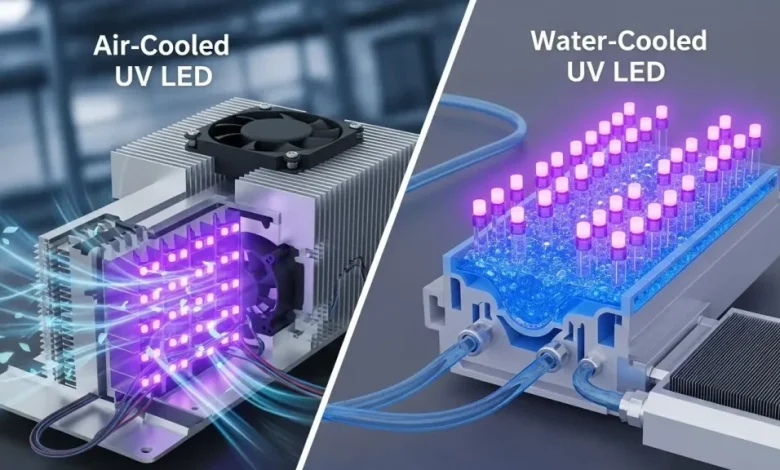
Operating through heat expulsion via fans, these systems maintain LED temperatures without intricate water setups. This innovative approach contributes to a longer LED lifespan and heightened efficiency, resulting in lower operating costs over time.
Installation is also straightforward—setup can occur without extensive plumbing or engineering prerequisites that often slow projects down. Additionally, the absence of potential leaks found in water-cooled systems contributes to increased uptime, making air-cooled units a solid choice for reliable production.
How Air-Cooled Curing Boosts Production Speed
Given that production speed is critical in modern manufacturing, air-cooled UV LED curing systems provide a distinct advantage. The high peak irradiance these systems offer facilitates quicker curing times without compromising quality. Various sector clients frequently report increased throughput, allowing products to be handled and processed more rapidly.
Experts witness that when companies switch to air-cooled systems, they benefit from a notable decrease in cycle times. Faster curing is no longer an aspiration; it’s a practical advantage with the correct application of these technologies. Ultimately, manufacturers can anticipate a smoother workflow with fewer bottlenecks and delays.
Real-World Applications: Where Air-Cooled Curing Excels
Air-cooled UV LED curing finds lucrative applications in multiple industries, highlighting its efficiency and versatility. From automotive to packaging, professionals recognize the clear benefits.
- Automotive: In automotive manufacturing, the demand for fast curing of coatings and adhesives is critical, and air-cooled systems effortlessly meet this requirement.
- Printing: The printing sector gains significantly, as air-cooled curing guarantees quick ink setting, resulting in improved print clarity and fidelity.
- Electronics: For electronic manufacturers, air-cooled curing has become essential for solder masks and conformal coatings, where speed and precision are imperative.
These examples underscore how many businesses find air-cooled curing systems adaptable to their specific operational demands.
The Benefits of High-Peak Irradiance in Curing
Why High-Peak Irradiance Matters for Quality Results
High-peak irradiance plays a crucial role in achieving superior curing results. This characteristic is especially pronounced in systems engineered for air-cooled applications. It promotes deeper substrate penetration, which facilitates a more thorough cure.
Clients aiming for optimal outcomes should recognize that enhanced irradiance levels usually lead to improved adhesion and durability of coatings or inks. When they implement these systems, noticeable improvements in quality often accompany decreased product failure rates.
Exploring the Impact of Dosage on Curing Performance
An understanding of the dosage-performance relationship is vital in the air-cooled domain. The correct UV dosage directly affects the efficiency of chemical reactions necessary for curing adhesives, inks, and coatings. Professionals typically observe that high-peak irradiance systems achieve ideal dosage levels with shorter exposure times, thus enhancing productivity while maintaining results.
- Enhanced Control: Professionals can adjust dosage levels based on substrate features or environmental conditions.
- Consistency: Automated systems ensure uniform dosage, minimizing human error and leading to better batch quality.
- Versatility: Air-cooled systems can adapt dosage levels for various applications without complicated recalibrations.
This adaptability directly translates into improved operational efficiencies.
Case Studies: Successful Implementations in Various Industries
Examining real-world implementations can yield useful insights. Take, for instance, a plastics manufacturer that transitioned to air-cooled curing systems for coatings. They reported a remarkable 30% reduction in production time while achieving enhanced surface finishes, resulting not just in cost savings but also greater client satisfaction.
In a similar vein, a packaging company incorporated these air-cooled solutions into their printing process. The outcome was a marked increase in printing speed, leading to substantial reductions in waste. Such instances highlight the measurable benefits of adopting air-cooled technology.
Understanding the Technology Behind Air-Cooled Systems
How Air-Cooling Technology Enhances LED Lifespan
The technical elements of air-cooling technology are pivotal in extending LED lifespan. Traditional LED systems often succumb to premature failures caused by heat buildup, leading to costly downtimes. In contrast, air-cooled solutions shine in this area, effectively managing heat dissipation to maintain optimal LED operating temperatures.
As temperatures stay low, professionals benefit from longer runtimes. Typically, an air-cooled LED system can surpass the lifespan of a water-cooled counterpart by two to three times. While the upfront costs may be steeper, the return on investment is evident through decreased maintenance and replacement expenses.
The Role of High-Power LEDs in Curing Applications
High-power LEDs provide the intensity crucial for effective curing. Within the air-cooled context, these LEDs allow for rapid, precise curing by emitting intense light at specific wavelengths ideal for the required chemical reactions. This targeted performance proves invaluable, especially in intricate applications demanding high fidelity.
Many professionals note that these high-power options shrink the curing footprint. A smaller curing setup means better optimization of floor layouts, facilitating streamlined operations resulting from these technological advancements.
Innovative Features of Modern Air-Cooled Curing Systems
Today’s air-cooled curing systems are equipped with features that enhance operational efficiency. Diagnostics tools for real-time monitoring of performance parameters represent a significant step forward. Why does this matter? Simple—businesses can identify potential issues before they escalate into major problems.
- Remote Monitoring: Numerous units offer operators the ability to monitor and control systems remotely, adding convenience and reducing the necessity for on-site inspections.
- Modular Designs: Systems can adapt easily as business needs grow or change, potentially lowering future investment costs.
- Energy Efficiency: Modern designs frequently feature efficiencies that reduce energy consumption, thus driving down operational expenses.
These advancements ensure that air-cooled technologies remain at the industry’s forefront.
Selecting the Right Air-Cooled Curing System for Your Needs
Key Factors to Consider for Optimal Performance
Choosing an air-cooled air curing system requires careful consideration. Businesses should focus on critical factors aligned with their projects. First, substrate compatibility is a primary concern. Different materials react uniquely to curing technologies, and understanding their requirements can lead to improved outcomes.
Next, production volume plays a pivotal role. Systems intended for high throughput differ significantly from those dedicated to smaller runs. Flexibility can be advantageous; selecting systems that adapt to future requirements helps avoid costly retrofits.
- Space Requirements: Ensure the system fits efficiently into the existing layout.
- Cooling Requirements: Evaluate environmental factors that might affect system performance.
- Budget Constraints: A thorough assessment of performance versus cost is essential. Sometimes, the cheapest option isn’t the best value.
Customization Options for Specific Application Requirements
Customization in curing systems has evolved from an option to a vital necessity. Many industries have unique needs that a one-size-fits-all solution simply can’t accommodate. Selecting an air-cooled system with adjustable parameters allows businesses to adapt the curing process to their specific applications.
Customization can take many forms, with key aspects including:
- Wavelength Selection: Different UV wavelengths increase flexibility for varied applications.
- Output Control: Precise control over output levels affects surface finishes and adhesion.
- Adaptive Features: Systems that automatically recalibrate based on environmental changes can make a notable difference.
Such tailored solutions provide businesses with a competitive edge that standardized models can’t achieve.
The Future of Air-Cooled Curing: Trends to Watch
The air-cooled curing landscape continues to evolve rapidly. Technological innovations push these systems toward improved energy efficiency, making them greener. As environmental considerations become more pressing, businesses will discover that adopting sustainable technologies is not merely advantageous—it’s essential.
Advancements in LED technology also present opportunities. As manufacturers create more efficient, high-power options, curing times will further decrease, enabling businesses to excel in speed and efficiency without compromising quality.
By remaining at the forefront of air-cooled air curing technology, those who anticipate trends are likely to reap the greatest benefits.
Staying informed on these trends empowers organizations to anticipate changes and adapt accordingly. In a swiftly changing market, flexibility becomes a vital asset.
FAQ
What types of industries can benefit most from air-cooled UV LED curing?
Industries such as automotive manufacturing, packaging, electronics, and printing typically see substantial advantages. Each sector relies on rapid curing times to elevate product quality and streamline production efficiency, positioning air-cooled solutions as ideal candidates.
How does air-cooled curing technology compare to traditional curing systems?
Air-cooled curing systems emerge as a lightweight, efficient alternative. By eliminating the reliance on water, they reduce maintenance, ease installation, and minimize potential leaks—leading to decreased downtime.
Are there specific considerations for selecting an air-cooled system based on substrate type?
Certainly. Different substrates exhibit unique responses to curing technologies, making this analysis essential when choosing an air-cooled system. Professionals generally recommend assessing substrate characteristics to ensure optimal compatibility for effective curing results.
What maintenance is required for air-cooled curing systems?
Generally, maintenance for air-cooled systems is uncomplicated due to their streamlined designs. Regular cleaning of fans and filters may be necessary to guarantee optimal airflow. However, upkeep is significantly less intensive than that of water-cooled systems.
Can air-cooled curing systems operate effectively in different environmental conditions?
Indeed, these systems are designed to be adaptable. Operators can fine-tune parameters based on environmental factors, ensuring consistent performance regardless of conditions, which enhances overall reliability.
What are the potential cost savings associated with using air-cooled UV LED curing?
Long-term savings can be considerable. While initial costs may be higher, the sustained longevity and efficiency of air-cooled systems often translate into reduced maintenance and energy expenses. Clients frequently realize a favorable return on investment over time.
How do customization options impact the effectiveness of air-cooled curing systems?
Customization options enable businesses to adapt curing processes to specific needs, greatly improving effectiveness. Adjustments in wavelength selection and output control can significantly enhance quality and efficiency across various applications.
What future advancements can be expected in air-cooled curing technology?
Future developments are likely to focus on boosting energy efficiency and refining LED technology. A movement toward more sustainable options is anticipated, alongside innovations aimed at decreasing curing times without sacrificing quality, ensuring alignment with market demands.
Useful Resources
- UV Wise – Educational Knowledge Resource on UV Technologies
- UV Technologies – Information on UV Curing Technology
- The Nerve – Insights on Advanced Manufacturing Technologies
- Semantic Scholar – Research Papers on UV Curing Techniques
- MIT Technology Review – Articles on Emerging Technologies
- ScienceDirect – Research Articles on Material Science and Engineering
- Royal Society of Chemistry – Information on Chemical Engineering and Adhesives
- Taylor & Francis Online – Journals on Manufacturing and Engineering Innovations
- American Society of Mechanical Engineers – Resources on Mechanical Engineering Practices