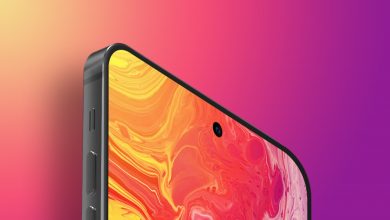
Mobiles: The Pocket-Sized Revolution Redefining Modern Existence

Few innovations in human history have reshaped civilization as profoundly as the mobile phone. Originally conceived as a communication tool, the mobile has evolved into a multifaceted companion that now occupies a central place in modern life. Today, it serves not merely as a device to make calls but as a portal to the digital world, a personal assistant, a creative studio, a source of entertainment, and, for many, an indispensable extension of the self. Compact, powerful, and perpetually connected, the mobile phone is a silent yet omnipresent participant in the daily rituals of billions.
The journey of the mobile is, in itself, a testament to human ingenuity. The first mobile phones, bulky and cumbersome, were status symbols—luxuries reserved for the wealthy or the technologically adventurous. Their sole function was to enable voice communication without the constraints of a landline. But as technology advanced, miniaturization combined with processing power gave rise to devices that were not just phones but pocket-sized computers. The launch of the smartphone, marked most notably by Apple’s iPhone in 2007, initiated a paradigm shift. No longer was the mobile merely about making calls or sending messages; it was about living online, on demand, and on the go.
Modern mobiles are marvels of engineering and design. They pack more computing power than the machines that sent astronauts to the moon. High-resolution cameras, biometric sensors, artificial intelligence, and lightning-fast internet connectivity are now standard features. Each year, manufacturers compete to push the boundaries of innovation—offering foldable displays, advanced optical zooms, AI-powered photography, and seamless integration with smart ecosystems. Yet beyond their technical prowess, what makes mobiles truly transformative is the role they play in everyday human experiences.
Mobiles have democratized access to information in ways that previous generations could scarcely imagine. With a few taps, one can learn a new language, read global news, explore scientific research, or watch a lecture from a world-renowned university. In this sense, the mobile phone is an educational tool of extraordinary power. It breaks down geographic and socioeconomic barriers, allowing individuals in remote or underserved communities to participate in the global flow of knowledge.
Communication, of course, remains one of the mobile’s core strengths—but it has evolved far beyond voice calls. Messaging apps, video conferencing, social media platforms, and collaborative tools enable continuous, multifaceted interaction. Families stay connected across continents. Businesses operate with remote teams spanning time zones. Friendships are maintained not through physical proximity, but through digital presence. The mobile phone has redefined what it means to be “together,” creating new forms of intimacy and community that transcend traditional boundaries.
The cultural impact of mobiles is equally profound. They have become instruments of self-expression, identity, and storytelling. Social media, powered largely by mobile access, has given rise to new forms of narrative—short videos, ephemeral stories, curated photo grids—through which individuals craft and share their lives. Mobiles have also empowered citizen journalism, allowing anyone to capture events in real time and distribute them globally. This real-time visibility has amplified social movements, exposed injustice, and held the powerful to account, often in ways that traditional media could not.
Yet the mobile revolution is not without its complications. With constant connectivity comes a host of new challenges—digital addiction, declining attention spans, and a blurring of boundaries between personal and professional life. Notifications demand our attention. Social media fosters comparison and, at times, anxiety. The omnipresence of the mobile phone means we are rarely alone, rarely unplugged, and often caught in a state of perpetual partial attention. This has led to a growing discourse around digital well-being, with both users and developers seeking healthier, more mindful relationships with their devices.
Privacy, too, has emerged as a central concern in the mobile era. These devices, for all their utility, are also data collectors—tracking location, habits, preferences, and interactions. While this data can enhance user experience through personalization and convenience, it also raises questions about consent, surveillance, and security. The mobile phone is both a window to the world and a window through which the world observes us. Ensuring transparency, control, and ethical standards in mobile technology is one of the defining challenges of our time.
Economically, mobiles have transformed industries and birthed entirely new ones. Mobile banking and fintech applications have revolutionized financial inclusion, particularly in regions where traditional banking infrastructure is lacking. The gig economy thrives on mobile platforms, enabling flexible work for millions. Mobile commerce has changed the retail landscape, empowering both large corporations and independent sellers to reach customers directly. For entrepreneurs, the mobile phone is often the first and only tool needed to start a business, manage operations, and reach a global audience.
In developing countries, the mobile phone’s impact is especially pronounced. It has become a tool for empowerment—enabling access to markets, health services, education, and emergency information. Mobile-based agricultural apps help farmers monitor weather conditions and crop prices. Health workers use mobiles to track vaccinations and communicate with patients in remote areas. For many, the mobile phone is not a luxury but a lifeline, bridging gaps in infrastructure and opportunity.
Looking to the future, the trajectory of mobile technology promises further integration with emerging innovations such as 5G connectivity, augmented reality, and artificial intelligence. These developments will make mobiles even faster, smarter, and more deeply embedded in our environments. We may soon see mobile devices seamlessly interacting with smart homes, autonomous vehicles, and even wearable health monitors, creating an ecosystem where the boundaries between device and user become increasingly fluid.
In conclusion, the mobile phone is far more than a piece of hardware. It is a symbol of the digital age—dynamic, complex, and deeply human. It encapsulates our desire to connect, to learn, to share, and to create. It amplifies our capabilities, reflects our values, and challenges us to use its power wisely. As we carry these devices in our pockets, we also carry the responsibility to ensure they serve not just our convenience, but our collective well-being. In the story of modern life, the mobile phone is not a supporting character—it is one of the lead protagonists, continually evolving, shaping, and redefining the world around us.